





Application of Liquid Ring Vacuum Pumps in Wind Tunnel Testing, Wind tunnel testing is a critical step in the development of modern aerospace technology. By simulating the aerodynamic and thermodynamic conditions encountered during actual flight, wind tunnels provide invaluable data for designing and optimizing aircraft. From the early experiments of the Wright brothers to today’s advanced aerospace programs, wind tunnel testing has continually advanced aviation and engineering innovation.

Understanding Wind Tunnels and Their Role
A wind tunnel is a specialized facility that generates artificial airflow to study the aerodynamic effects on objects. It is used to test the structural resilience, heat resistance, and aerodynamic efficiency of various models, from aircraft to vehicles. The world’s first recognized wind tunnel was built in 1871 by British engineer Wenham, aiming to measure the resistance experienced by objects moving relative to air.
By generating controlled and varied artificial airflow, wind tunnels allow researchers to observe, measure, and optimize designs before real-world applications. For example, the Wright brothers conducted over 200 tests on wing models using a wind tunnel in 1901, leading to the invention of the first powered airplane in 1903.
Principles of Wind Tunnel Testing
1. Relativity Principle
Wind tunnel testing relies on the relativity principle, which states that the aerodynamic forces acting on an aircraft moving through still air are equivalent to those acting on a stationary aircraft in moving air of the same velocity. This allows the simulation of flight conditions within a controlled environment.
2. Similarity Principle
The similarity principle is also fundamental. By creating small-scale, geometrically similar models of an aircraft and using adjusted airflow velocities, researchers can extrapolate real-world aerodynamic forces and behaviors from test results.
Applications of Wind Tunnel Testing
Wind tunnel testing provides critical insights into various aspects of aerospace design, such as:
- Aerodynamic Layout Optimization
Testing ensures that the aerodynamic design of new aircraft models is both efficient and effective, highlighting areas for improvement. - Engine Duct and Bypass Ratio Testing
By evaluating how airflow divides between internal and external engine ducts, researchers can optimize the bypass ratio for different engine types. High bypass ratio engines are ideal for passenger aircraft, while low bypass ratios suit combat and tactical aircraft. - Performance Metrics Validation
Key aircraft performance metrics, including flight speed, climb rate, range, payload capacity, and engine thrust, are validated through wind tunnel experiments. - System Robustness Testing
Wind tunnels simulate harsh conditions such as extreme wind speeds or turbulence, allowing researchers to measure structural resilience and refine designs.

Stringent Requirements for Wind Tunnel Testing
Ground-based wind tunnel experiments must meet strict requirements to ensure the reliability of data:
- High Power Capacity: To generate airflow at velocities reaching several kilometers per second, wind tunnels must have sufficient power.
- Extended Testing Duration: Simulations must run long enough to provide accurate, comprehensive data on flight dynamics.
- Precision Measurements: High-accuracy instruments are necessary to capture detailed aerodynamic and thermodynamic effects.
Role of Liquid Ring Vacuum Pumps in Wind Tunnel Systems
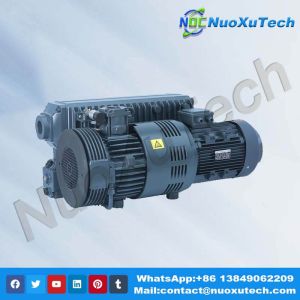
Given the large-scale setup and the need to achieve significant vacuum levels within short time frames, liquid ring vacuum pumps are indispensable for wind tunnel testing platforms. These pumps are particularly effective due to their high pumping speed, reliability, and ability to handle large volumes of air and vapors.

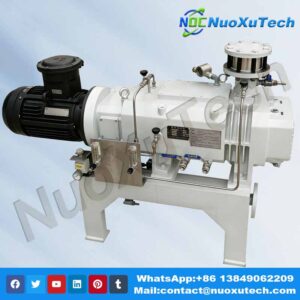
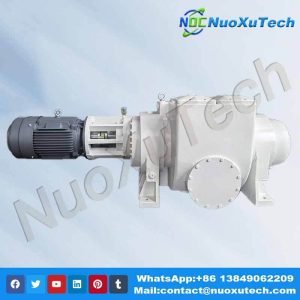
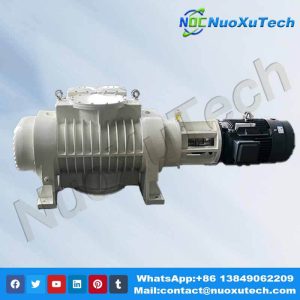
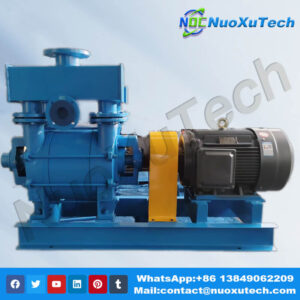
At NuoXuTech, we recommend models like the 2BE3 Liquid Ring Vacuum Pump or a Roots Pump-Liquid Ring Pump Combination Unit for such demanding applications. These systems provide the following advantages:
- High Pumping Speed: Essential for achieving the necessary vacuum conditions quickly and efficiently.
- Durability and Efficiency: Designed to withstand the rigorous demands of continuous operation in wind tunnel environments.
- Versatility: Suitable for handling varying gas compositions and pressures encountered during testing.
Conclusion
Wind tunnel testing is a cornerstone of aerospace development, enabling the precise simulation of flight conditions and validation of design principles. With their exceptional pumping capacity and robust performance, liquid ring vacuum pumps play a crucial role in maintaining the operational efficiency and accuracy of wind tunnel platforms.
For organizations looking to enhance their wind tunnel systems, NuoXuTech’s liquid ring vacuum pumps offer a reliable, high-performance solution to meet the most stringent testing requirements.
Contact Us
For more information about The Application of Liquid Ring Vacuum Pumps in Wind Tunnel Testing Platforms, contact Nuoxutech at contact@nuoxutech.com or visit our Blogger nuoxutech.blogspot.com .You can also reach us on WhatsApp at +86 13849062209.Our team is ready to provide you with professional service and support.
Keywords
wind tunnel vacuum systems, liquid ring vacuum pumps, wind tunnel testing, High-capacity liquid ring vacuum pumps for wind tunnel experiments in research facilities, NuoXuTech 2BE3, Roots pump-liquid ring pump combination