



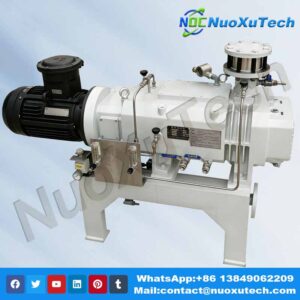

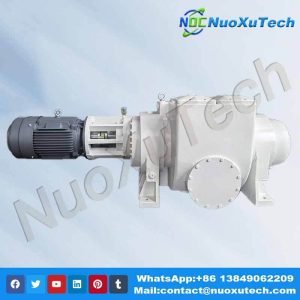
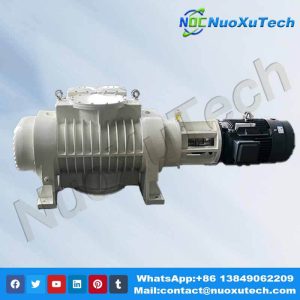
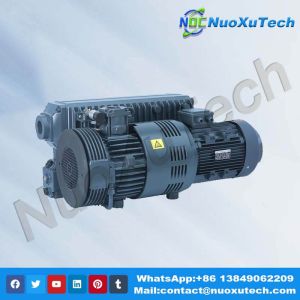
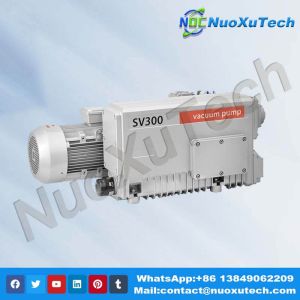
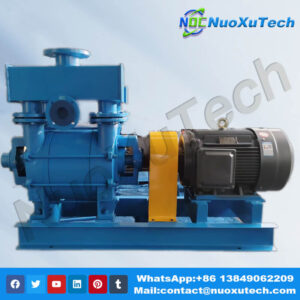

Applications of Dry Screw Vacuum Pumps, Dry screw vacuum pumps utilize a pair of synchronized, high-speed rotating screws to generate suction and exhaust. These pumps are widely used in various industries due to their efficiency, reliability, and versatile applications.

I. Key Features of Dry Screw Vacuum Pumps
- High Reliability
With fewer moving parts and no vulnerable components, dry screw vacuum pumps offer exceptional reliability and long service life. - Easy Operation and Maintenance
These pumps are designed for ease of operation and low maintenance, reducing downtime and operational costs. - Excellent Power Balance
The pumps feature no unbalanced inertial forces, allowing for smooth, high-speed operation without vibrations. - Versatile Performance
Dry screw vacuum pumps maintain high pumping speeds across a wide range of pressures and are nearly unaffected by exhaust pressure. - Multi-Phase Gas Handling
Due to the small gaps between the rotor teeth, these pumps can evacuate corrosive, toxic, particulate-laden, and condensable gases efficiently.

II. Applications of Dry Screw Vacuum Pumps
Dry screw vacuum pumps are used across various industries, including electronics, nuclear energy, chemical, pharmaceutical, and food industries. Their applications include:
- Semiconductor Industry
Used in chip production, LCD manufacturing, etching processes, and plasma-enhanced chemical vapor deposition (CVD) processes. - Nuclear Industry
Applied in vacuum systems for nuclear reactors and related vacuum processes in the nuclear energy sector. - Chemical Industry
Used for vacuum distillation, solvent recovery, and efficient solvent extraction. They are also applied in the production of fatty acids and the removal of contaminants from spray injectors. - Pharmaceutical Industry
Dry screw vacuum pumps play a crucial role in solvent recovery, pharmaceutical intermediate recovery, maintaining sterile environments for artificial organ production, and disinfectant gas recovery. - Food Industry
Applied in the concentration of flavors and fragrances, as well as in food packaging processes. - Other Industrial Applications
- Vacuum Distillation
- Molecular Distillation
- Solvent Recovery
- Oil and Gas Recovery
- Vacuum Drying
- Vacuum Coating
- Textile and Metallurgy Industries
- Aerospace and Military Applications
- Toxic, Corrosive, or Dust-Containing Gas Removal
- Specific Requirements in Various Industries
- Semiconductor Industry: Requires pumps that can prevent backflow into the vacuum chamber to avoid contamination.
- Petrochemical Industry: Requires pumps capable of handling large volumes of condensable, corrosive, toxic gases, and gas mixtures containing fine dust.

In the semiconductor industry, dry screw vacuum pumps are used for precise gas evacuation in clean environments with zero contamination. The pump’s performance can meet various cleanliness conditions, including:
- Clean Conditions: Removal of dry air or air with minimal moisture.
- Moderate Conditions: Removal of reaction gases without solid particulates.
- Harsh Conditions: Removal of toxic or carcinogenic chemical reaction products and solid particles.
In the petrochemical industry, dry screw vacuum pumps are ideal for handling challenging gases, including those that are corrosive, toxic, or particulate-laden, ensuring that complex industrial processes are carried out safely and efficiently.
Contact Us
For more information about Applications of Dry Screw Vacuum Pumps, contact Nuoxutech at contact@nuoxutech.com or visit our Blogger nuoxutech.blogspot.com .You can also reach us on WhatsApp at +86 13849062209.Our team is ready to provide you with professional service and support.
Keywords:
dry screw vacuum pump, vacuum applications, Dry Screw Vacuum Pump Uses, Oil-Free Screw Vacuum Pump Applications, semiconductor vacuum, Applications of Dry Screw Vacuum Pumps, solvent recovery, vacuum distillation, Nuoxutech, oil-free vacuum pumps, China-manufactured dry screw vacuum systems for cleanroom and coating use, High-efficiency dry screw vacuum pump for corrosive gas handling.