



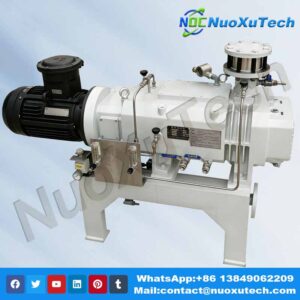

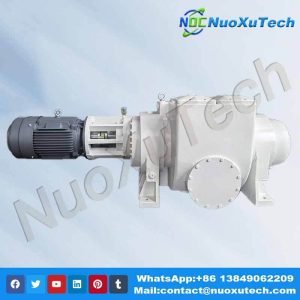
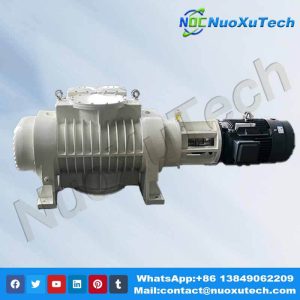
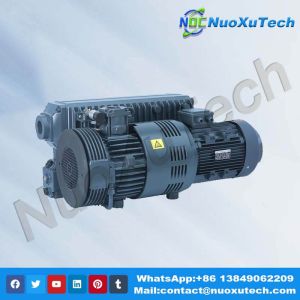
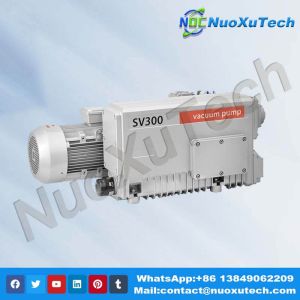
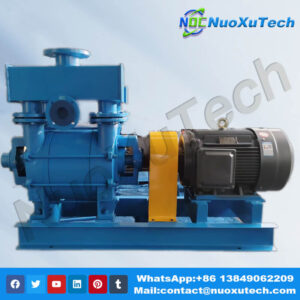

Vacuum Systems for Oil Refining, Vacuum systems play a vital role in oil refining processes, including vacuum distillation, bleaching and purification, and oil filtration. Different vacuum pump configurations are used to meet the specific requirements of these processes, such as Roots vacuum systems, rotary vane systems, and oil ring pump systems.

I. Key Processes in Oil Refining
1. Vacuum Distillation for Oil Refining
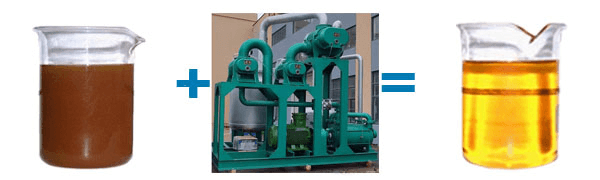
Vacuum distillation is crucial for refining oils like waste engine oil, diesel, condensate oil, palm oil, gasoline, and bio-oils (e.g., fish oil, vegetable oil, and edible oils).
- Vacuum Requirement: High vacuum levels
- Applications:
- Roots-Piston Systems
- Roots-Rotary Vane Systems
- Roots Oil Ring Pump Systems: Use oil as the working fluid, typically transformer oil or lubricating oil. For waste engine oil refining, engine oil itself can be used as the working fluid.
- Advantages: Efficient separation of impurities and oil components.
- Process Flow: Includes heating, vacuum extraction, and condensation stages for efficient oil recovery.

2. Oil Bleaching and Purification
This process uses chemical reagents like activated clay or bleaching agents to remove impurities, dust, and moisture from waste oils.
- Vacuum Requirement: Low vacuum levels
- Temperature: Typically 110–120°C
- Steps:
- Mixing activated clay with oil under vacuum.
- Stirring to allow impurities to bind to the clay.
- Settling and separation in a clarification tank.
- Applications: Improves oil clarity and removes contaminants effectively.
3. Oil Filtration (Vacuum Oil Filter Systems)
Oil filtration is essential for purifying contaminated oils by removing mechanical impurities, oxidation byproducts, and water.
- Vacuum Requirement: Low vacuum levels
- Operating Temperature: Typically below 110°C
- Functions:
- Dehydration and impurity removal.
- Restoring oil properties like cleanliness, viscosity, flash point, and insulating strength.
- Enhancing equipment safety and efficiency.
- Techniques Used:
- Gravity, centrifugal force, pressure filtration, and vacuum distillation.
- Applications: Often used independently, such as for purifying vacuum pump oil.

II. Working Principles of Vacuum Oil Refining
- Vacuum Siphoning: Controls the vacuum level based on water content in the oil using a vent valve.
- Temperature Control:
- Operating below 110°C prevents oil cracking and degradation.
- Heating reduces oil viscosity, facilitating sedimentation and the removal of impurities.
- Vacuum Range: Ranges from atmospheric pressure to ultimate vacuum levels, depending on process requirements.
Contact Us
For more information about Vacuum Systems for Oil Refining, contact Nuoxutech at contact@nuoxutech.com or visit our Blogger nuoxutech.blogspot.com .You can also reach us on WhatsApp at +86 13849062209.Our team is ready to provide you with professional service and support.
Keywords:
vacuum systems, oil refining, vacuum distillation, oil filtration, oil purification, Nuoxutech, Roots vacuum pumps, vacuum oil filters, vacuum technology, Oil Refining Vacuum Technology, Vacuum pump systems used in crude oil distillation and refining processes, China Vacuum System Manufacturer for Oil Industry, Vacuum pump systems used in crude oil distillation and refining processes, Roots and steam ejector vacuum systems for atmospheric and vacuum distillation.